Showing posts with label Beer. Show all posts

Sunday, July 24, 2011

Citra IPA


Citra IPA ver. 1
6% ABV / 90 IBU
brewed on June 3rd
age at tasting: 7 weeks
2.5 gallon batch
As much as I love making beer, my true
strength is as a food photographer, clearly.

Grains: 0.3 lb cara-pils / 0.25 lb wheat
Malts: 3 lb extra light DME / 12 oz clover honey
Hop Schedule: 
1 oz centennial @60
0.5 oz citra @15
0.5 oz citra @0
1 oz citra dry hopped
Yeast: Wyeast American Ale II

If you don't care about any of my rambling preface, feel free to skip down a bit. I'll mark where the actual review starts and the explanations / backstory / bullshit stop.

So here we are, the very first completely Bear Flavored ale of my own design. While my peach hefeweizen was sort of an original creation, the base hefe recipe was taken from Brooklyn Homebrew and simply adapted to my needs. This, though, isn't based on any recipe whatsoever, just my own whims.

Here's the inspiration: the world of beer is a magical, growing world. IPAs have been especially fun in the last 20 years, because unlike other ingredients used in alcoholic beverages, new hops are being developed all the time, creating totally new, unique flavors. One of the newest and most interesting breeds of hops is called "citra," and since it was just created in 2008, not many breweries have had a chance to work with it yet. But after trying a few beers that used it, and reading descriptions online, I knew I had to give it a try. Citra hops have this unbelievably potent aroma — it's a nice hoppy smell, but with hints of mango and peach. It's... amazing. I want candles made of it. I want clothing made out of it. And obviously, I wanted to use it in some beer as soon as possible. So it was time to design an IPA around it.

I read from a number of homebrewers online that citra isn't great as a bittering hop, despite its relatively high alpha acid content, and might lead to some weird flavors instead of the nice clean bitterness I wanted. I decided to use centennial as a bittering hop instead, as it met all those qualifications — mid-level alpha acid content, floral fruity qualities, and a clean unaggressive bitterness.

Here's where I screwed up a bit. It's summer, I needed to ferment my beer at reasonably cool temperatures, and therefore, the beer needed to fit in my temp-controlled mini fridge. So I started brewing smaller 2.5 gallon batches. And for half sized batches, I figured I could mostly just cut the amount of ingredients in half, with a few adjustments. For an IPA, I'd want about 5 or 6 ounces of hops per 5 gallons — here, I decided to use two ounces of hops in the boil and another ounce for dry hopping. I didn't consider that I just couldn't split things in half like that without also adjusting the timing of the hop schedule. True, I was only adding a total of two ounces of hops to the boil, but I was still adding a full ounce of centennial at sixty minutes, and with half as much wort, that led to far greater hops utilization. Long story short, when I put my recipe into some brewing software, I realized I had brewed an IPA with 91 IBUS. Most IPAs land somewhere around 50 to 70 IBUS — 91 is hitting imperial range. But Imperial IPAs usually have double the malts too, to give them enough sweetness to balance things out. I was using pilsner malts with very little of anything that would add malty sweetness. In fact, I was purposefully trying to go in the complete opposite direction from my first, recipe-based IPA, which was way too malty. I had brewed this IPA to be as dry and hop-focused as can be. Whoops.

Well, my first taste of the beer after a week of aging confirmed what I feared — there was absolutely no sweetness, and it was incredibly bitter, dry, and tart. It was a lot like drinking grapefruit juice. I liked it, but I knew it was absurdly unbalanced and only major hopheads would enjoy it. Then I let it age for another two weeks, before trying another bottle.

Actual Review: You'll hear it a lot from homebrewers, but what an incredible difference just a few weeks of aging makes. This IPA went from an overwhelming bitterness that washed out any other flavors, to a dry-but-smooth, super citrusy west coast style IPA. Don't get me wrong, it's still unbalanced. It's still bitter, but somehow, the bitterness seems smooth and fairly refreshing now. I'm actually really happy with this one. I like IPAs on this end of the spectrum, and it has a good amount of fruitiness to make up for its lack of sweetness. It's smooth and drinkable and extremely hoppy. It doesn't taste exactly like any other IPAs I've had, but there's no weirdness to make it unique in a "Oh huh... that's... different" kind of way.

This won't be my go-to IPA recipe, obviously. It fits a particular whim, but it also doesn't really satisfy what I was trying to accomplish — an IPA based around the strong, unique character of citra hops. After recently discovering a few other breweries with citra IPAs (and you can read those reviews here) I've concluded that maybe citra hops are just very difficult to make taste the way they smell. I know it can be done, because I've had at least one beer like that. But most citra IPAs have a unique taste that isn't necessarily directly fruity — the fruitness is there, but alongside something else. My IPA, unlike those others, took on more of a grapefruit flavor, wrapped around some tasty citrusy hop flavors. Citra creates a very interesting mouthfeel, but I think the trick to getting those strong aromas to come out is a massive amount of dry hops.  In this case, I obviously leaned a lot more toward a bittering hop profile, and that clearly took over. I'd like a citra IPA to have modest IBUs, I think — otherwise, citra may as well be any number of other American hops.

Future Revisions: In this case, having ordered extra citra hops, I ended up brewing a version 2.0 not long after this one, so I'll already have a comparison in a few weeks. I actually didn't change that much for the second version, and I still kind of messed up the IBU calculations. Number 2 is end-hop loaded instead of front hop loaded, though, so there should be some differences. We'll see. Other than that, I guess I would just tweak my recipe to make it more "balanced," with maybe gold malt extract instead of extra light DME, even less bittering hops, and at least double the amount of dry hops.

Some Other Citra IPAs, Reviewed

Kelso IPA #4 — B+
Mikkeller Single Hop Citra IPA — B+

Kelso Brewery is one of New York City's few true "local" breweries — by which I mean, they actually brew everything here and don't outsource the majority of the work to Utica. (In fact, they contract brew for Heartland Brewery, which is oddly one of the few brewpubs in NYC. For a city with so many hipsters and beer nerds, it's sad that we're so lacking in actual beer production.)  Anyway, despite their legit local cred, you tend not to see Kelso's brews all that many places — they seem to have a small fraction of the distribution that Sixpoint enjoys. So when I saw that they were brewing an IPA remarkably similar to the IPA I was attempting, I was like "Hey, that's cool." I don't know anything about what went into this IPA other than its hop profile (nor do I know the hop schedule) but nonetheless, Kelso's IPA #4 was a citra-centered ale with cascade and centennial hops backing it. And that is essentially what I did — cascade and centennial are considered extremely similar sister hops, with centennial having a higher alpha acid content, and therefore being most often used as a bittering hop. Which is what I did, though I didn't add in any additional cascade. So anyway — sounded similar; I had to try. Of course, if you've read my assessment of my own beer, you know that it didn't come out anything like your typical, balanced IPA.

I'm not at all surprised that Kelso's citra IPA and Mikkeller's Citra IPA taste nothing like mine, but it is bizarre how little either IPA tastes like what I expect from citra. See, actual citra hops, before they're put into beer, have this remarkable, incredibly fruity mango/peach flavor, but from something that's still distinctly hoppy. It really might be one of my favorite smells in the entire world. I expected citra hops to taste like this once added to beer, but they don't, really. Both Mikkeller and Kelso's citra IPAs taste pretty similar, with what I'm guessing was a more-or-less comparable amount and variety of malts. Both are sort of malty and sweet, as far as IPAs go, similar to other east coast IPAs. Oddly, I think citra benefits from a beer that isn't too sweet, and definitely not too malty. Both seemed like they would have gained from being lighter, letting the juiciness of the hops shine through. Or maybe — as I might have learned from my own citra IPA — citra comes out as kind of tart and grapefruity when it's allowed to contribute to the bitterness. If Kelso and Mikkeller wanted to avoid that, I can see why they would have gone darker. As I concluded before, I think citra is best used, and certainly most unique, as an aroma hop.

As a flavor hop, it's still kind of different in a way I can't quite explain. It still has some fruitiness, but the flavors are all melded together into this rounded, very smooth taste that somehow also has a sharp bitterness at the same time. It's interesting and unexpected, but it's hard to pick out or describe individual flavors. It creates an IPA decidedly unlike other IPAs, and yet it's not as bursting with flavor as I would have expected, or hoped. So, pro's and con's, I guess. It's definitely still a fantastic hop, and both of these beers were among the better IPAs I've had recently. I don't remember either specifically enough to review them individually, but I tasted them a few days apart and was definitely left with the impression that they were quite similar. Single-hop IPAs usually have a hard time achieving complexity, for obvious reasons, so the fact that these were quite good — judged against their general style — just makes me want to see citra used in more creative ways.

Monday, July 11, 2011

A WHOLE ****TON OF IPA REVIEWS

Weyerbacher Hops Infusion (PA) — B-
I think hops tend to fall into about four approximate categories: citrusy (and juicy), spicy, piney (which can blend into spicy), and floral (which can blend with piney.) Weyerbacher's IPA embodies the spicy end of the spectrum, with a very dry, spicy, and slightly piney taste. The bitterness is extremely prominent, with little in the way of sweetness rounding it out, and the spicy character of the hops themselves lending to a consistent mouthfeel and dry aftertaste. If you love hops doing that kind of thing, then this is an IPA for you. Personally, not being a huge fan of spicy dry hops, I'd rate this one as average, though it's good for what it is.

Ballast Point Sculpin IPA (CA) — B+
While I don't know that I'd consider this one of the best IPAs I've had, I can see why Sculpin is often mentioned amongst the top tier of IPAs in the country. It's not overrated, it's just a quintessential IPA that's perfectly executed. It's a little dry and not quite as juicy as I'd like, but I suspect if I had this beer fresh, on tap somewhere, it would be more impressive. As it is, the bitterness is a bit monotone, but tasty nonetheless. There's a nice clean grapefruit taste that accents the light-body lack of sweetness. I don't mind unbalanced IPAs — I like the west coast style because I prefer that they not be overly malty — but I am honestly surprised at how unbalanced Sculpin is, tending toward that dry-mouth bitterness. I would certainly get this one again, though I doubt it'll ever enter the ranks of my all-time favorites.

Great Divide Titan (CO) — B
For an IPA, this beer is intensely smooth and malty, and tastes a lot more like the English variations of the style than what you'd expect from a Colorado IPA. I could be mistaken — or maybe I just got a weird bottle — but I thought Titan sported the unique taste of British yeast, something you don't find much from that part of the US. There's a definite hop kick to the aftertaste, and a bitterness that lingers on the tongue, but otherwise you could convince me that this was a nice creamy Scottish ale. It's tasty though, and a nice unique blend of styles. Even though I'm not entirely sure what's going on here, I wouldn't mind drinking Titan on a regular basis.

Ithaca Flower Power (NY) — A
Flower Power is one of the driest east coast IPAs that I've had; it seems much more like a west coast beer. And it really lives up to its name. Floral and crisp and light in color like a thick golden pilsner, it's shocking to find that Flower Power packs an 8% ABV.  Yet as drinkable as it is, the hops are still what sells this IPA. Flower Power embodies the floral side of the hop spectrum, with enough of a hint of pine and citrus to balance things out. It works well for the beer, especially given its crisp body and mouthfeel. Well done in every way, Flower Power is probably in my top 3 IPAs.

Lagunitas IPA (CA) — A+
This is one of those rare cases where a beer is ubiquitous not just because the company has excellent distribution — although that's probably most of the reason — but also because it's just an all-around excellent (and sessionable) beer. Not that I was paying much attention at the time, but I remember this IPA as one of the first that got me into the style. (And thank god for that; what did I even drink before I became a hophead convert?) It's no wonder to me now. After sampling nearly every IPA I can get my hands on, I keep coming back to Lagunitas as my perfect IPA — perfectly bodied, pleasantly bitter, with mouth-watering citrus / floral / juicy hop flavors. It's everything I want in a beer, and it looks beautiful too. Now, don't get me wrong, I know it's not a very adventurous IPA. But we all need a beer we can come back to anytime, and easily kill a sixpack of, and right now, this is it for me.

Stone IPA (CA) — A-
The hops here are focused on a nice clean bitterness, and only as it warms, on certain sips, do the juicy citrus hops shine through. In another words, this is a pretty quintessential west coast IPA, fairly similar to Sculpin. It's lighter, though, and despite the very present bitterness, it's still quite flavorful. One of my favorites, though I can't think of much else to say about it. Stone knows their way around hops.

Victory Hop Devil (PA) — B+
If east coast IPAs are more your thing, this should probably be one of your go-to beers. Well balanced between malty, hoppy, bitter and fruity, this a great representation of the style, probably one of the best. Since I like my IPAs a little less malty, I'm not sure if I consider this one of my favorites. I can't really pinpoint anything remarkable about it, just that it's good.

Butternuts Snapperhead (NY) — B-
This is a quirky little beer, and not just because it's one of the first IPAs I saw appear in (and only in) cans. Despite its billing, this one doesn't seem much like an IPA; I'd say it's like a cream(y) ale mixed with a pale ale. Judged by those funky hybrid standards, I thought it was pretty good: it's beautiful, creamy, and drinkable, with a pleasant mouthfeel that brings traces of hops, citrus and smooth light maltiness. Don't quote me on this, but I believe I also detected British yeast, adding to the smoothness of the beer's profile. If you're a hophead, this might not be your thing, but it's a decent beer for what it is.

Southern Tier IPA (NY) — B+
While nothing groundbreaking or particularly unique upon first taste, this is one of few IPAs I've had where I can really pinpoint the melding of various hop flavors (without it being jarring or weird.) At first, it seemed not unlike the Lagunitas IPA, as it's the same color and achieves the same almost-creamy smooth mouthfeel, with light malts, a darkened gold hue, and a nice floral/citrus aroma typical of the style. But this one is less juicy or fruity, and actually has a lot of those spicy / peppery hops kicking around. Which sort of masks the fact that this one isn't very bitter — hoppy, but not that bitter. This isn't my favorite combination of hop-types, but it's very well done.

Redhook Long Hammer (WA) — C+
Long Hammer's main selling point is its price — sixpacks are usually a few bucks cheaper than any other IPAs in the beer aisle — so I wasn't expecting anything great here. In that sense it met my expectations, and it's not bad per se, it's just a little... wonky. The hops don't seem to be quite balanced right, and don't quite blend together. The maltiness is a little off and the carbonation, rather than making the beer pleasant to drink, seems to add a bit of a weird metallic bite. I can't tell if this is the result of capable brewmasters just trying to make an IPA that's more affordable — which is fine, really — or an IPA that for whatever reason didn't come together right, but got released anyway. While I thought it was drinkable, I probably wouldn't buy it again unless I was feeling particularly cheap.

Sixpoint Bengali Tiger (NY) — B
I've had Bengali Tiger various times on tap, but since Sixpoint just released their four main beers in cans, I figured I needed to include their IPA in this roundup. It's a nice blend of the various 'types' of IPAs, with a bit of citrusy, spicy and floral joined together, but not quite as malty and sweet as many east coast IPAs. It makes for a nice well-rounded beer, but also an IPA with nothing particularly distinct going on. Beers like this are great when you're out at some generic bar, and it's likely to be one of the best things on tap — but nothing I'd stock my fridge with on a regular basis.

21st Amendment Hop Crisis (CA) — B-
Technically, this one shouldn't really count for an IPA roundup, but I've sort-of been collecting 21st Amendment's line of interesting cans and badass boxes — which, I have to admit, are usually superior to the beer they contain. Fittingly, Hop Crisis is an okay Imperial IPA, but nothing particularly special. The ABV is on the high end of the spectrum even for the style, at 9.7%, despite the smooth golden color the beer pours. While it's light, it's also a bit syrupy, and the alcohol is a bit too warm and noticeable. The hop flavor is nice and juicy, but I could have gone for even more hops. There's very little bitterness, just a nice citrusy flavor that merges into the sweetness. Okay, but underwhelming.

Tuesday, May 31, 2011

FIRST THREE BEAR-FLAVORED ALES

Bear-Flavored Pale Ale #1 (26 IBU)
5 gallon extract batch
Grains: 0.5 lb American crystal 20L / 0.5 lb cara-pils
Malts: 3.3 lb light LME / 3 lb light DME
Hops: 1 oz Perle (bittering) / 1 oz Cascade
Yeast: Safale US-05 dry ale yeast
Expectations: I didn't have every high expectations for my first Bear Flavored Ale — capturing the flavor and essence of bears is notoriously difficult. #1 didn't turn out terrible, in the general scheme of things, but it's so far removed from what I was expecting that I am definitely a bit frustrated with it.  Basically, this beer is just too sweet. There are so many things that could have affected the outcome, given my limited knowledge at the time of brewing, that I'm already done worrying about it. Mostly, I think the outcome was a problem shared between the recipe I was using and my own techniques. For one, this recipe didn't have much in the way of hops, so they were never meant to pop through in the flavor end. But to make matters worse, I think I let the hops go a bit stale, and I'm also pretty sure that I added the flavoring/aroma hops too early in the boil. The beer came out very bready, kind of thick with a definite yeast flavor. This, too, confuses me. These first two recipes came with dry yeast, which most homebrewers recommend avoiding — so partially, it could be that I wasn't using great yeast. But I also wonder if maybe the fermentation didn't quite go right, and maybe cut out before it was meant to. Since I wasn't taking gravity readings, I have no way to know. Lesson learned.
Taste: If I told you that this was some kind of sweet light brown ale or something, you might not be disappointed. It's not terrible, and some bottles have hit me better than others, but the sweet maltiness is just a bit overboard for my tastes, and that yeasty, bready flavor is never going to seem right to me. I can't say that I've ever had a commercial beer with a similar profile. Hopefully I'll be able to avoid it in the future.
Keeper? No. When I return to brewing a pale ale, I'm going to go for something hoppier, dryer and not as bready. There's nothing here worth borrowing from — just a number of things to learn lessons from. But that's why it was my first brew.


Bear-Flavored IPA #1 (43 IBU)
5 gallon extract batch
Grains: 1 lb crystal malt 60L / .5 lb crystal malt 20L
Malts: 3.3 lb light LME / 3 lb light DME
Hop Schedule:
0.5 oz Kent Goldings @60
1 oz Galena @60
0.5 oz Cascade @45
0.5 oz Cascade @15
0.5 oz Kent Goldings @0
Yeast: Safale US-05 dry ale yeast
Expectations: If you understand what IBU's mean, you'll already realize what I wish I would have known before I brewed from this recipe. 43 IBUs isn't very hoppy for an IPA, and is actually more in line with an American pale ale. Unsurprisingly, this came out tasting like what I expected from my pale ale — except it's still got some distinct yeasty / bready flavor that I can't quite pinpoint, and definitely don't like. I think it's mostly the grains, partly the yeast, and very likely the methods I used during the brewing process. Still — you can at least taste the hops in this one, and while it's much darker and maltier than I would like, it's serviceable.
Taste: There's that something about the flavor profile in this IPA and pale ale that I'm not a fan of. It's not bad, but it has something going on that just isn't right for the style, and maybe not right for ales in general.  It's definitely a larger issue than not using enough hops — though in addition, there are not enough hops, so.  There aren't any subtleties going on, and while the mouthfeel and carbonation and all that are fine, this beer just doesn't have a whole lot of character. Even the hops are a little bland and generically bitter, from what you can notice of them. Having said that, I do prefer it over the pale ale.
Keeper: I'll likely be brewing IPAs more than any other style, so it's possible that I'll return to something vaguely similar to this. But as with the pale ale, there isn't enough that I like here to base another recipe off of, so I doubt I'll ever tweak this one intentionally.


Bear-Flavored Peach Wheat (Peafeweizen)
5 gallon extract batch
Grains: 1.75 lb wheat malt
Malts: 3.3 lb wheat malt extract / 2 lb extra light DME
Hops: 1 oz Hallertau (bittering)
Yeast: Wyeast #3068 Weihenstephan Wheat
Adjuncts: 3 lb peach puree (added to secondary)
Expectations: For this beer, I finally strayed from a basic recipe kit and set off into Adventureland, so I had high hopes. Unsurprisingly, and reassuringly, I think this is by far the best beer of the three, and inarguably the closest to the expectations of its style. This tastes like a hefeweizen. Whew. There's none of that bready, yeasty flavor that overtook my first two. Of course, few things are ever perfect, and I'm haunted here by one glaring flaw. For some reason, this beer didn't carbonate properly, and most of the bottles I've had so far have been kind-of flat. Sigh.
Taste: I really am shocked at how much this came out tasting like what I wanted. The peach is on the subtle end of things, but you can actually notice it if you know it's there. Instead of an overpowering, sweet flavor, it contributes more of a general fruitiness and a slightly tart, slightly sour profile that I think goes well with the wheat base. Everything together is fairly subtle, with the effect that this tastes like your basic hefeweizen, except not quite. I really came so close here, but I can't quite be satisfied since — and I'm not quite sure how — the priming sugar hasn't quite done its stuff.  After two weeks of conditioning, this is still coming out with very little head, and mostly flat. Fortunately this doesn't affect the taste very much, but it does reduce the enjoyability of the beer — and it's annoying. I have no idea why wouldn't have carbonated properly, since I added the usual amount of priming sugar, but wheat beers are generally pretty high in carbonation, so it's sad to see this one so lacking. Hopefully a few more weeks of conditioning will help a bit.
Keeper: Most likely I will keep this recipe around to play with in the future, although it has a few things working against it. For one, peach puree is really goddam expensive, apparently. It cost almost as much for the peach as it did for the rest of the beer, and the flavor is so subtle that I wonder if it's really worth it.  (Probably why you rarely, if ever, see any commercial peach beers). While I am enjoying this, I'm not enjoying it significantly more than I would a standard hefe, so it'll likely be a long time before I revisit this recipe. When I do, I may increase the percentage of peach or try to bring out some more unique flavors in order to differentiate it, because, why not?

Monday, May 23, 2011

SOME THOUGHTS FROM A NOVICE HOMEBREWER


Beer is the greatest thing in the universe, so it stands to reason that you'd want to make your own. Congratulations. You’re basically entering a long, delicious period of forced alcoholism, only you have to work harder at it. If you're curious about the beer-brewing process, and wanted to hear the perspective of someone who just barely knows what they're talking about, then you've come to the right place.

Now, I'm a sucker for the DIY thing, but such activities are rarely entirely practical — we started mass production of consumer goods for a reason, after all, and there are very few things you’ll be able to create more cheaply and more easily than their manufactured counterparts. Sometimes you can make them better. Mostly, you can enjoy just knowing how they’re made, and do something more productive with your time than working on sculpting your ass imprint into your couch as you watch endless reality TV show marathons. It feels good to do something, to make something yourself. And in the case of homebrewing, the result is 5 gallons of beer. That’s 50 bottles. Of beer. After a hard day of work, there's really nothing more comforting than knowing that there is yeast living in a bucket in your closet, farting out alcohol for you to drink.

Still, there are some important questions. Why brew beer, you may ask? A reasonable question, I suppose, if you hate having fun, are a terrorist, or drink wine. In this blogopost, I will attempt to answer this question, and other questions. Why brew beer? In all seriousness, the answer as the same with any DIY venture. It is fun, it makes you cooler and more attractive, and you can make a convincing (if still bullshit) argument that it's educational. And eventually, if you are good enough, you will get beer out of it. (So basically the exact same reasons people learn to play guitar.)  However, homebrewing is not necessarily cost-effective, and it's definitely not a time saver — pretty much for the same reasons you wouldn't start a band with the goal of obtaining free music. If you’re going into it for financial reasons, maybe reconsider. You should brew beer because you love beer and want to understand what makes beer so much better than all other available beverages, and also, to impress other dudes with beards.

Probably the first issue anyone is concerned about is cost. The cost of brewing your own beer is a difficult thing to address, but consider that the most important factor is your own mindset. A basic brewkit can be obtained from anywhere between $85 to $150 dollars, but it's very easy to spend twice that after your first few batches on little conveniences here and there. After doing it for ten years, you might have spent a thousand dollars on equipment. It's certainly possible — you can get elaborate keg set-ups and fancy custom-built stainless steel equipment and all sorts of gear for the sake of convenience. But technically, you can get everything you need to brew beer for under $150, maybe even less than $100 dollars. I started by purchasing an $85 dollar equipment kit which had everything I needed to get started. In retrospect, I regret not buying a more inclusive kit, but as a beginner you unfortunately don’t really know what the hell anything is, or how it’s used. I bought a large, 8-gallon aluminum kettle at the convenience store for cheap (no equipment kit that I've seen comes with a brewing kettle, but chances are you don't have anything large enough already sitting around in your kitchen.) Soon after brewing my first batch, I decided a few more things were going to be worth the extra investment. I upgraded my hose with an auto-siphon, which I can’t recommend highly enough. Trust me, you don’t want to have to dick around with physics and gravity and magnets and bullshit like that. After deciding to do a peach wheat beer, I needed a secondary fermenter, so I was back at the homebrew store picking up a hefty glass carboy, which don’t go cheap. And other things — a decent stirring spoon to avoid gross contamination from cook-ware, a funnel, PBW to remove bottle labels, extra sanitizer, extra bottle caps, etc. Plus, once you know you need to start saving up empty bottles, it’s even easier to justify picking up another sixpack at the store. It’s for Science.

Sooner or later, but probably sooner, I’ll very likely pick up more odds and ends. For example: my apartment doesn’t have central AC, and yeast start to get pissy when it gets too hot — like above 75 degrees. (Temperature control, surprisingly, is one of the most important factors to consistent homebrewing. Sanitation is the other. And your recipes, obviously.) While there are ways to keep the temp down on a fermentation vessel, it’s a lot harder to keep 50 or 100 bottles at a reasonable temperature for an extended period of time, especially during a muggy New York summer. I’m currently looking to buy a mini-fridge from some college kid moving out, which wouldn’t be a big investment. The thought of having to give up brewing for the next three months is devastating, since I'm just getting into it.

Still, equipment is more or less a one time investment, and not that much of one.  Ingredients generally cost around $30 - $40 for a 5 gallon batch. So, that's not bad. Sixpacks of decent beer rarely cost under $10. Looking at just the cost of ingredients, brewing your own beer costs less than half of what you'd pay for beer of the same style in the store. Of course, there are cheaper options out there — but you'll still probably beat the cost/taste ratio of medium-grade stuff like Yeungling or Lion's Head. PBR and Budweiser will start to edge you out in the price arena, and beers cheaper and worse than that, well, they'll always probably be cheaper and worse than what you can manage. Here is one of the great ironies of homebrewing: lagers are much harder to make than ales for the homebrewer, despite being drastically cheaper (usually) at the store. This is because lagers ferment at colder temperatures and require an extended fermentation process, meaning they require additional equipment and attention. Plus, lagers (especially pilsners) generally go for a much cleaner, lighter flavor that leaves no real room for error. If the concept of 'no flavor' being difficult to achieve perplexes you, consider that a slightly off flavor in a rich, complex beer like a stout will be masked by everything else going on, whereas your Bud Lites and so forth are calculated to have as little taste as possible, thus leaving nothing to mask any fuck-ups or inconsistencies. Weird, but it does make sense. Even crappy beer is still complex, and there's a lot that can go wrong. The Big Guys have multi-billion dollar budgets. They have equipment you will never in your life have access to. They have an automated process that allows them to brew watered-down lite beers very very cheaply. To me, the amount of work necessary to create a "decent" pilsner, a beer that will never approach my favorite IPAs, wheat beers and pale ales, just isn't worth it. If you are a fan of pilsners, you can certainly try them yourself down the line, but the general consensus is that newbies should start out with ales.

For me, the most difficult thing was just understanding what I was doing the first time I brewed. There are a lot of things to manage, and the process can seem long and strange.  I still don't fully understand what effect every little detail can have, much less the variations and outcomes of every potential ingredient that goes into a beer. For the first few times, it's going to be easiest to buy a pre-assembled recipe kit. Make sure everything is fresh, and the recipe includes "speciality grains" and hops. (If there are no hops in your recipe kit, you've been sold shit.) Once you're brewing and get past the stress of that first batch, the most difficult thing is waiting to brew again, to perfect what you've learned from last time and try out new ingredients (especially if your last batch was drinkable but not great.) I'm a little tiny bit obsessive, and a perfectionist, so I've been spending hours online reading homebrew forums since I started, trying to pin down basic recipes for ideas I had. Possibly the most difficult but also exciting thing about beer brewing is the sheer, absurd variety of ingredients. You really begin to appreciate how absurdly complex beer is when you're staring at a list of dozens of hops, grains and yeast, all of which have their own specific attributes. There is literally no beverage in the world that can match beer's complexities and subtleties and variations — not coffee or tea or soda or wine or milkshakes. The combinations just within the three main ingredients are nearly limitless — to say nothing of adjuncts — and if you have the right personality, you'll undoubtedly get caught up in searching out new combinations and tweaks. At that point, it can be excruciating waiting to brew your next batch.

Will your beer be good?  That depends. I'm not even going to get into all the techniques involved in the actual process, since this post isn't meant to help anyone who's already started brewing. But to summarize, there is extract brewing (slightly simplified) and all-grain brewing (which requires an extra step, and therefore additional equipment and opportunity for errors, but also greater control and freshness). Either way, homebrewed beer has the potential to be as good as anything you can get in the store. I will comment (in another post) on my first few brews, which I can confidently say are not poisonous. One of the most appealing things about homebrewing, to me, is the imagination involved. You can pretty much make anything, from clone recipes of hard-to-find favorites, to wacky experimental beers that no one will want to drink. You learn a lot about beer in the process. If you need a hobby, some way to feel like you've actually accomplished something with your evenings and weekends and blooming alcoholism, it's hard to beat homebrewing for its resulting satisfaction.

Monday, April 4, 2011

UNIBROUE SIX/MIX PACK


La Fin Du Monde
With a name like La Fin Du Monde (so badass), I'd almost expect something more aggressive, or darker.  Yet Monde is a fairly light example of the style — almost light and citrusy enough to seem like a very yeasty white beer.  The smell is a bit strange here, almost too floral for its own good, but the floral fruity yeast taste is pretty standard.  Again, there's an almost orange-like flavor at the back-end, but it adds a bit to the smoothness of the mouthfeel.  Perhaps the most surprising thing about this triple is how creamy it is — it's really, really drinkable, even at 9%.  You definitely run the risk of drinking this one too fast.  I don't drink Belgian triples too often, so I feel I'm always a bit off when trying to describe them.  The more of this one I drink, the more I'd like to claim it's one of the best triples I've had, but that may just be the ABV talking.

Maudite
Maudite is listed on BA as a Belgian Strong Dark Ale — a strong "amber-red" according to the box — but it'd be awfully easy to mistake this for a double. There's that creamy, bread-like feel to it, and a caramel brown-sugar taste with hints of fruit.  The hints of fruit add a sweetness, but muted — everything here is tightly controlled.  Perfected, I'm tempted to say.  Even the high alcohol adds a hit of warmth, rather than bite.  The carbonation compliments the sweetness, and makes this extremely drinkable but not too light.  If you like this kind of beer, you'll like this beer.

Trois Pistoles
Halfway through the sixpack now, I'm noticing some trends.  Unibroue beers have something characteristic about them, something in the mouthfeel or the yeast.  They're all solid — not crazy, or particularly complex, but still tasty and on the drinkable side of the spectrum for such Belgian styles.  The lighter, weaker presence of the beer makes them go down easier, even if it sacrifices a bit of complexity.  Trois Pistoles is another Belgian Strong Dark Ale, so it's obviously a bit similar to Maudite, and maybe even a little thinner.  Thin and light doesn't have to mean it lacks taste, fortunately.  This one is sweet, with a sharp burst of that sweetness hitting right away, alongside the malts.  It lingers pleasantly and doesn't stick or leave any unpleasant tastes behind.  The high alcohol content is extremely well hidden, and there's a nice warmth that hits well with the plum/raisin fruitiness.  Unibroue knows what they're doing with these.

Ephemere
I'm glad this one isn't sweet. I expected it to be — I think I may have had all of one apple beer before, and it was as cidery as you'd expect.  Not here.  Ephemere is almost sour, with a sugary apple taste that's almost like candied fruit, something savory and tart but not obnoxious.  It doesn't taste fully natural, and I'm sure there's no way they got this result just by tossing a few apples into the brewpot.  Still, even if it doesn't taste natural, it tastes good.  There seems to be some kind of wheat-beer base, something light but substantial enough to actually provide backbone.  Fruit beers need that, they need to have the taste and mouthfeel of beer, otherwise they just taste like syrup.  Ephemere manages a strong but balanced blend of taste and consistency, which can't be easy to do.

Monday, February 28, 2011

21ST AMENDMENT BEERS


Back In Black - 21st Amendment (CA)
This beer has a bit of identity crisis, but as Americans — a hodgepodge mix of those bold immigrants who found refuge here over the years, after rebelling against their imperialist governors and slipping into the sweaty, moist-palmed embrace of democracy — don't we all have a bit of an identity crisis?  It's a question that, I can only assume, 21st Amendment is trying to pose with Back In Black, the brewery's black IPA.  This style's been popping up a bit more in the last year, but black IPA's are still far from common. And for an IPA, this beer is extremely malty. It's sweet not in the way many double IPA's are, or even 21st Amendment's Bitter American — it's sweet in that slightly-tangy, almost grapefruity way Belgians sometimes are, with hints of coffee and brown sugar.  Like a Belgian double got mixed in with an pale ale.  The hops are present, but aren't the focus at all, which tips the balance oddly far from bitter.  And as dark as it is, the mouthfeel is a bit like a porter, making the combination all the stranger.  It might not be for everyone, but I think it works.  If I have a major complaint, it's that the overall effect could be a little smoother.  The tangyness is a bit much, and it's almost like drinking juice, but it fades quickly enough into sweetness that I never really cared.  This isn't a beer you would want to drink a sixpack of all at once, but I enjoyed every one of them on their own. 

Bitter American - 21st Amendment (CA)
The can rules. This beer rules — definitely my favorite of the three, easily. I'm having a hard time pinpointing exactly what 21st Amendment's "thing" is.  It seemed like maybe they aim for the more experimental side, little subtle differences that compliment the uniqueness of their packaging.  Yet Bitter American is just all-around solid.  For a pale ale, or even just a hoppy ale, it's very drinkable — an easy session beer for a few reasons.  It's well-blended, well-balanced, and slightly sweet, with a more noticeable malts presence.  The hops are surprisingly subdued, especially for a beer with "bitter" in its name.  It's light and sweet almost to the point of being creamy, and only in the aftertaste do you get a bit of that floral, spicy hoppiness, with a bitter kick that might have some of the aluminum-can taste jumping around.  Or that might just be my imagination — you hardly notice it, either way.  The ABV on this one is low, so that probably helps.  Too bad this is a seasonal, because I'd be quick to drink this all year round. 

Fireside Chat - 21st Amendment (CA)
Riding on top of a strong, already-sharp prune flavor, this is the only beer of the bunch where I definitely noticed some metallic flavor lingering from the can.  It wasn't significant, and really, it might have all been in my head, or even part of the spices. Those spices end up rising sharply into the aftertaste, making the beer seem initially flat and almost bitter, and later leaving a lot of 'leftover' flavor in the mouth.  Regardless, I would not advise drinking this straight from the can — or any of these, for that matter. For the love of god, pour it into a pint glass.  At least as Fireside Chat warms and mellows out, the mouthfeel becomes smoother and richer, rather than sharp.  This one is a lot like other winter spice beers, similar even to a Belgian double, just without the complexity.  Not bad, and perfectly drinkable, but not as interesting as I was expecting.

Saturday, January 29, 2011

ANCHOR STEAM XMAS, SARANAC VANILLA STOUT, ET AL


Our Special Ale 2010 - Anchor Steam (CA)
VERDICT: Good winter beer (B+)
Every year, Anchor Steam's Christmas Ale (aka Our Special Ale) is apparently slightly different — I don't know how different, but I do know that 2009's and 2010's have been two of the tastiest winter beers I've had.  This "winter warmer" is sweet and rich, with a sort of malty, spicy molasses taste not far removed from a Belgian double, but toned down for drinkability.  Despite the dark mahogany color, the Special Ale is relatively light, almost creamy, with only a slightly sticky mouthfeel hindering its smoothness.  The spices manage to create a distinct Christmas flavor, and while I remember liking 2009's recipe maybe slightly more, this is still a delicious seasonal beer that I highly recommend grabbing if you find it.

Saranac Vanilla Stout - The Matt Brewing Company (NY) 
VERDICT: Good stout, could use more vanilla (B)
Saranac (aka Matt Brewing Co) is one of my most trusted breweries, consistent and workmanlike as the Adirondack mountains they call home, but their lineup can be surprisingly adventurous too.  Their caramel porter really impressed me, so I was excited to find a vanilla stout in my winter mix pack.  The idea of a vanilla stout is as appealing to me as a folk-influenced post-rock band comprised entirely of bears, but I've only found one other example — Southern Tier's Creme Brule Stout, which is incredibly delicious.  Saranac's vanilla stout is much more down-to-earth, as one might expect from the brewery, and the vanilla flavor is just not strong enough.  It's there, making for a smoother, cleaner mouthfeel (and giving the beer a pleasant smell), but it doesn't do enough to distinguish this beer from other stouts.  It's like a milk stout but not quite as smooth — in fact, the vanilla seems to somehow blend in with the slightly-bitter hop notes rather than smothering them.  It's not that this beer is lacking in taste, though — beer drinkers who prefer their experiments on the subtle side should enjoy this one, as it's an all-around good stout, well-balanced, drinkable and very tasty.

Pumpkin Ale - Kennebunkport (ME)
VERDICT: Pumpkin-flavored soda (C-)
At six dollars for a sixpack, Kennebunkport's pumpkin ale is the cheapest pumpkin beer I've ever seen, but since I got it at Trader Joe's, that didn't seem too unusual until I realized that it was brewed by a genuine brewery from Maine.  Then I noticed that the bottle reads "ale with natural flavor added," which makes this the only pumpkin beer I know of where the pumpkin flavor is added via some kind of syrup, instead of incorporating it into the brewing process (or skipping pumpkin altogether and just throwing in pumpkin pie spices, as most do.)  At first, I was surprised — cheating on the pumpkin at least gives this beer a stronger flavor than most, and the pumpkin taste is extremely pronounced.  Unfortunately, it's just not very good.  The beer is so light, the syrupy pumpkin flavor so clear, it's more like drinking soda than beer.  There's a sort of sticky sweetness that might be initially pleasing, but wears out its welcome quickly. Pumpkin flavor is inherently too subtle to be overpowering, but this is the pumpkin ale most likely to disgust avid beer drinkers.

Josephs Brau Dunkelweizen - Trader Joe's (CA)
VERDICT: Good, and cheap (B)
If you've had any of Trader Joe's store-brand beers before, you should know what to expect: solid representations of traditional styles that taste better than they have any right to, while remaining ludicrously cheap.  Their hefeweizen remains one of my favorite American takes on the style, so I'm not surprised that their recently released dunkel similarly impresses.  Appropriately dark and rich, this dunkel isn't notably different from the hefeweizen except in color and a heightened reliance upon malts.  Which is not unusual for the style, though some might knock it for not being bolder, and for being slightly watery.  Personally, the taste and mouthfeel are pleasant enough that I don't mind it being a little unadventurous — it's hard to imagine a beer with as nice of a flavor as this being any more drinkable (or cheaper.)  Sure, I'm grading this beer on a scale.  Nonetheless, it's delicious and a great deal.

Wednesday, November 17, 2010

MORE PUMPKINS, WINTER CIDER, VERTICAL EPIC


La Parcela - Jolly Pumpkin Artisan Ales (MI)
VERDICT: Surprising and unique (B+)
The running joke with Jolly Pumpkin was that, the first time anyone sees one of their beers, they assume it's a pumpkin ale — except Jolly Pumpkin is just the name of the brewery, and until very recently they didn't even make a pumpkin beer.  However, Jolly Pumpkin has quickly and deservedly earned a reputation as one of the most interesting micros out there, and when I saw that they finally made a pumpkin, I was all in a tizzy of excitement.  It's a pricey one, yet not as potent as I expected: the ABV comes in under 6%.  But with Jolly Pumpkin you can always expect something solid, and not only does this hold true here, but La Parcela is easily one of the most unique pumpkin beers I've had.  Though the pumpkin barely comes through, it's spicy and tasty in such a strange way that I'm willing to forgive it.  In fact, La Parcela is a shockingly wine-like beer in taste and mouthfeel, aided by a surprising, puckery sourness.  Once you get passed that, there's a whole bunch of other things going on — it's pleasantly carbonated and has a nice medium body, a solid, smooth mouthfeel, making it almost a cross between a sour ale and caramely Belgian double.  If anything, the pumpkin gives it a bit of a "funky" taste.  Overall, one of the most enjoyable beers that I've had this year, but it's also not taking the right steps to reach the upper-echelons of pumpkin beer champions.

Frog's Hollow Double Pumpkin - Hoppin' Frog (OH)
VERDICT: One of the better pumpkin ales (B+)
A tasty, lighter pumpkin, the secret to this one is probably right in the name.  The flavor and mouthfeel isn't much different from your standard pumpkin ale, just richer, sweeter and better — as if they took the recipe and doubled everything good about it.  This one is closer to Weyerbacher's Imperial Pumpkin than it is to Southern Tier Pumking, but the lightness also seems to allow for a bit more pumpkiny flavor than Weyerbacher's.  The trailing-off at the end is smooth, almost too smooth, but keeps Frog's Hollow quite drinkable despite the sweetness. I only found this one at the Whole Food's beer room on Houston late in the season, but it's worth keeping your eye out for.

Pumpkin Pie - Chelsea Brewery (NY)
VERDICT: Surprising but not satisfying (C+)
This is honestly one of the most unique beers I've ever had, yet I can't decide if I even like it. It's certainly a strange pumpkin beer, and I'm glad for all the new entries into the style that are making an effort to do things differently. None of them has entirely succeeded, in my opinion, but they're at least being creative. Chelsea's doesn't even look like a pumpkin beer – it pours a murky, opaque gold, like a hefeweizen. It basically tastes like all the spices of a pumpkin pie, minus the actual pumpkin. And true to its appearance, it's very light, despite its strong spicy taste. Though I heavily criticized Coney Island's Albino Python, I'd say Pumpkin Pie isn't far off from that – a spicy white lager of sorts, but here the taste is smoother and more palatable, with the spices coming in richer. It does become somewhat off-putting halfway down the glass, with a bit of a menthol aftertaste burying the more pleasant characteristics of the beer. Worth trying, though – the nice thing about the recent variety of pumpkin beers is that there's probably one out there to capture what you envision the style should be.

Winter Seasonal - Woodchuck Hard Cider (VT)
VERDICT: Unsurprising but still satisfying (B-)
I'm a pretty big fan of Woodchuck's cider.  I have to give them credit for the diversity of their main lineup, plus the creativity they show in coming out with a number of seasonal ciders, something that no other cider brand really attempts.  Woodchuck's Fall cider is one of my favorite beverages ever, and while their other seasonals are nowhere near as exciting, they're still solid.  Winter seems to be their attempt to make a somewhat more complex cider, and I suppose on those grounds, it's nothing astonishing.  If you don't drink a lot of cider you probably wouldn't even be able to tell the difference, but there are hints: aged in oak barrels with vanilla, these little touches do add some interesting aftertaste to the cider, though not enough to greatly shape its profile.  The vanilla is most noticeable in the body, making it just slightly smoother and tastier, while the oak-aged treatment seems to have added a bit of sharpness and bite to the initial taste.  These extra touches aren't terribly exciting, but they're worth savoring, and if you like cider anyway, the same holds true as always: it's a very drinkable, refreshing beverage.

10.10.10 Vertical Epic - Stone Brewing (CA)
VERDICT:  Solid, but not quite epic (B+)
10.10.10 is a one-off beer by Stone, and you can probably even guess when it was brewed. Stone being mostly known for badass-levels of hops in their beer, I was fairly surprised to see them making a Belgian, even if it is a Belgian Strong Pale Ale.  At 9.5% ABV, you can smell the alcohol faintly, but it's well hidden in the mouthfeel of the beer itself, which packs a nice, immediate flavor without being overpowering.  It's smooth yet complex — I would have expected more hoppiness, but Stone went toward the sweet end on this one, adding in some grape varieties that give it a lighter, wine-like presence.  Really, anyone trying this one should check out the brewing process Stone used, and all its crazy ingredients: things like a "legendary Ardennes strain of Belgian yeast," "triticale (a cross of wheat and rye), hopped with German Perle hops, and steeped with chamomile"... "Muscat, Gewurztraminer, and Sauvignon Blanc grape varieties."  Jesus Keg-Standing Christ.  While not the best example of the style that I've had, 10.10.10 is interesting enough to justify its experimental brewing status.

Tuesday, October 12, 2010

2010 PUMPKIN BEER ROUNDUP


In case you're wondering, pumpkin beer is legit.  Fruit-flavored beers don't have the best reputation, and usually for good reason.  They're often just generic ales with syrup added after the brewing process, instead of fermenting the fruit itself — frankly, some of them could pass as soda.  With the exception of lambics (a great style that bucks this trend), beer was rarely made with fruit until recently.  Yet pumpkin ale has been around for hundreds of years.  In Colonial times, American brewers couldn't afford to ship expensive ingredients overseas from England, so they used what they had around.  And what did they have?  Well, aside from apples (hard cider is perhaps the most patriotic of all beverages) they had pumpkins, the greatest of all vegetables (they are vegetables, right?)  Pumpkins, it so happens, work really well in beer, blending well with the natural bitterness of hops, and adding a unique flavor that doesn't overpower the beer or end up tasting like chemicals.  And thus the two greatest things in the world were paired, creating one of the most potentially delicious substances of all time.

GREAT:
Pumking - Southern Tier (NY)
The Great Pumpkin - Elysian  (WA)
Despite all my enthusiasm for pumpkin beer as a style, I don't think it's been perfected by most modern brewers.  Only since the mid-2000's has the style become popular, and though just about every micro has a pumpkin beer of their own now, many of them just aren't that great, or original.  Southern Tier and Elysian provide the exceptions: two wildly unique pumpkin beers with no rivals.  Despite the large number of beers on this list, no others come remotely close to these two, either in taste, style or sheer perfection.  And yet, each is completely different from the other, proving that there's more than one perfect pumpkin beer recipe — the sign of a truly worthwhile style.  I hope to see more beers compete with these two in years to come, but for now, they are without question among the best beers in the world, of any style.

GOOD:
Imperial Pumpkin Ale - Weyerbacher (PA)
Smashed Pumpkin - Shipyard (ME)
Night Owl Pumpkin - Elysian (WA)
Fisherman's Pumpkin Stout - Cape Ann Brewing Company (MA)
Punkin' Ale - Dogfish Head (DE)
A few steps down from "Great", these are still solid beers — better than many of other styles, and certainly better than most other pumpkins.  They all earn extra points for uniqueness.  Weyerbacher's entry is like a sweet brown(sugar) ale, smooth and rich with spices, simply tastier than most.  Shipyard's special, rare pumpkin (they have another, inferior entry on the list) is lighter in mouthfeel but also high in ABV, and has an interesting, earthy vegetable profile, like a chunk of raw pumpkin, somewhat similar to Night Owl, the second Elysian beer here (and nowhere near as good as their first, The Great Pumpkin). Cape Ann makes the only pumpkin stout that I've ever seen, and as you might guess, the stout taste overwhelms the pumpkin, but nonetheless makes for a very smooth, tasty beer, similar to a milk stout with a more complex profile. Dogfish Head, generally one the best breweries in America, came up with one of the first pumpkin beers in the microbrew movement.  Possibly as a result, their try is surprisingly tame for a Dogfish and not strong in pumpkin flavor — basically a brown ale with some funky caramelized flavoring.  It's nonetheless a delicious and unique beer.

AVERAGE:
Pumpkin Ale - Blue Point (NY)
Pumpkin Brewster - Sixpoint (NY)
Leaf Pile Ale - Greenport Harbor (NY)
Saranac Pumpkin Ale - The Matt Brewing Company (NY)
Pumpkin Ale - Captain Lawrence (NY)
Will Stevens' Pumpkin Ale - Wolaver's / Otter Creek (VT) 
Pumpkin Cider - Woodchuck Hard Cider (VT) 


With any style, an "average" is going to be established eventually, a standard for the style that most breweries will tend to work around.  It's already happened with pumpkin beer — a good sign for its establishment as a mainstream style, I suppose, but rather disappointing when you're trying to find something interesting to drink.  I have to assume a bit of it is laziness, as all the better pumpkin beers are rarer and pricier, whereas these beers are more easily found, often populating grocery store sixpack aisles.  The taste of this "average" is generally not strong in pumpkin flavor, and at this level, many breweries barely use any actual pumpkin in the making of their beer, resorting instead to cheap "fall" spices that give a vaguely pumpkin pie-like flavor. Blue Point and Sixpoint have new entries for 2010, and rise a bit above the rest; certainly, they're worthwhile beers to have on any occasion, even if they aren't particularly unique.  Saranac Pumpkin is a personal favorite of mine for its strong vanilla aftertaste, but once again, the pumpkin flavor is not very prominent. Woodchuck's is of course a cider, not a beer, but still deserving of placement on the list.  The pumpkin flavor is barely noticeable, adding more to the smooth, crisp mouthfeel than anything else, but it's an excellent fall drink.

SUB-PAR:
Pumpkin Barrel Ale - Fire Island (NY)
Pumpkinhead Ale - Shipyard (ME)
Pumpkin Ale - Buffalo Bill's  (CA)
Pumpkin Ale - Smuttynose (NH)
Post Road Pumpkin Ale - Brooklyn Brewery (NY)
Smiling Pumpkin - Heartland Brewery (NY)
Compared to the entire world of beer out there, none of these are exactly bad beers.  If you see one in a bar and don't have many other options, by all means, give it a try.  But Smuttynose and Brooklyn Brewery unfairly hog grocery store aisles with their sixpacks, crowding out many superior pumpkin beers that just didn't land widespread distribution deals — and that annoys me.  Most of these are very similar to the "standard pumpkin beer recipe" I talked about above, but with a few tweaks that bring out the more unpleasant characteristics of the beer.  If you like bitter, sharper beers (but not as a result of hops, which are barely noticeable) then this may simply be a difference of opinion.  I find the mouthfeel watery and unpleasant and the pumpkin taste almost gimmicky.  Still.  Could be worse.

AVOID:
Harvest Moon Pumpkin Ale - Coors (CO)
Jack's Pumpkin Spice Ale - Anheuser-Busch (MO)
"Worse."  Avoid.  Don't ask questions.  Just walk away.

Sunday, December 6, 2009

BEER: BEER (BEER)

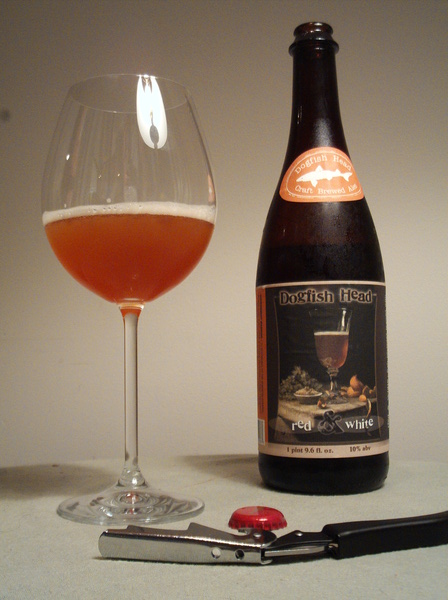
Red & White - Dogfish Head (DE)
VERDICT: Recommended
Red and White is a witbier all Dogfish'd up, and while the wheat beer base is eventually noticeable after a few sips, the first taste still comes as a bit of a shock. Red and White is split into separate batches after the initial brewing, each aged with different additives before being recombined, and red wine somehow takes a role in the brewing process. Basically, Dogfish doing what Dogfish does. This is actually a pretty good beer for wine fans, as the "red" characteristics comes through clear while riding along on the crisper mouthfeel and easier drink-ability of beer. While not overbearing, there's "tangy" as well as "tart" happening all up in your mouth. But still wheaty. And good. This is a beer that becomes tastier the more of it you have — pretty impressive for 10% ABV.

Trader Joe's Vintage Ale 2009 - Trader Joe's / Unibroue (CAN)
VERDICT: Recommended
Trader Joe's works some magic, and I'm not sure exactly how — magnets, unicorn dust, a tampered-with deck of cards, but they consistently stock their shelves with Hopes and Dreams for quite a bit less than you're used to paying for either of those items. Their special vintage ale, brewed for them by Unibroue and released every late-fall, is only 5 dollars for a 22 ounce bottle, 9% ABV.  Most impressive.  Classy, well designed, cork and all. I want to stress: this is a beer made by a grocery store chain. And it's pretty tasty, too. A dark, rich Belgian dubbel style ale, I expected this to be a mere imitation of a generic style, but it holds up quite well to its European brethren. The taste is strong and smooth, and my initial reaction was a bit of a rootbeer flavor, but the taste continues to escalate as long as you hold it in your mouth, creating a very satisfying, pleasantly carbonated buzz of spices. This goes down easy, despite the high alcohol content, and the aftertaste fades very, very fast — which is good here. There's no unpleasantness at any point, even after killing a whole bottle. As this is a vintage ale brewed only once a year, get it while you can.

Heartland Brewery Smiling Pumpkin Ale - Heartland Brewery (NY)
VERDICT: Indifferent
One of the last pumpkins I've seen around this year, I figured I'd try this one while I had the chance. It's nothing to hold me over until next year, unfortunately. This is basically an unnecessarily stronger version of the blander varieties of pumpkin ale, hitting a lot of spicy, strong taste notes without really creating much of an interesting flavor. It's possible that Heartland makes a few varieties of pumpkin, and since I got this in a growler I'm not sure if it's some weird variation, but the sign said 8% ABV and you can definitely taste it. This is rich, almost on the syrupy side, and makes for a decent winter ale because of the burn, but it gets a little sickly about halfway down the glass. The alcohol and musky spice sensation is far too prominent, and after that sets in you can't really sense any other nuance the beer might have had. It's not the worst I've had, but finishing even a single glass requires some effort.

Jack D'or - Pretty Things Beer & Ale Project (MA)
VERDICT: Good
Saisons are traditionally Belgian ales brewed for summer on farms, but this is a pretty decent American recreation, though on the tame side.  Pretty Things is a new brewery on the scene, and impressed me from the get-go with their innovative bottling and label design — you gotta appreciate the little touches, they let you know these guys take things seriously. But back to the beer: it almost seems like an inverted pale ale, with a hoppy start and sweet finish — probably sweeter than is common for the style, but making for a very smooth, easy mouthfeel. It's crisp and actually seems to develop more texture as it goes on, blended nicely, though with a definite focus on hops above any other flavor. Despite the flowery sensations you get on top of the base of yeast and grains, it never seems overly rich — only earthy and straightforward.

Black Orchard - The Bruery (CA)
VERDICT: Passable
It looks like a stout, smells like a stout, talks shit like a stout, but it's not a stout. I can't really decide what to think about this interesting take on a Belgian dark ale, but it certainly wasn't what I expected, and unlike any of its kin. It pours pitch black with a brownish head, medium-bodied. It really does taste like a stout... a fruity, slightly funky stout with a witbier mouthfeel. Most of the taste comes through the heavy malts and the slight oatmeal stout thing going on, though there is some zing in the end. The stout taste fads early and gives way to other sensations, some of which work, some of which don't, at least until you've had enough for the flavors to normalize. It's not bad, considering the initial shock, but if I wanted a beer like this I'd probably just order something else instead next time.

Wednesday, November 11, 2009

FURTHER BEER REVIEWAGE

So here are some more beer reviews. Pretty straight-forward, you know?

Jahva Imperial Coffee Stout - Southern Tier Brewing (NY)
VERDICT: Intense, stouty
Lately I've been going through something of a stout phase, so it's a good time for reviewing the offerings of Southern Tier, and up-and-coming NY brewery that has a pretty legit variety of interesting, varied stouts. Though both pack asskickingly high ABVs (this one at 11%), their Jahva Coffee Stout is at the opposite end of the spectrum from their Creme Brule (see previous review). It's not the darkest or heaviest beer I've had, but it's not messing around either. That isn't to say it's overwhelming, though — in fact, Jahva is surprisingly drinkable for as intense as it is, even if the coffee / milk stout expectations are misleading. The coffee flavor isn't lost, and there is a strong sweet initial taste, but the finish is bitter, like a very lightly sweetened cup of espresso. The flavor, mouthfeel and complexity are both almost over the top, but not quite. Southern Tier packs a lot into their brews, but they have a perfect sense of balance, and know when to stop too.

Coney Island Albino Python - Shmaltz Brewing Company (NY)
VERDICT: Toothpaste
Beers like this distinguish the good brewers from the bad, and Coney Island might already be dead to me. Some (Southern Tier and Dogfish) can pull of these experimental beers, while others seem to have brewmasters more concerned with bizarre novelty than actual flavor. Albino Python is a "spicy white lager", which intrigued me at first — a lager with witbier properties, maybe even a little hefe spiciness? I thought I was hooked, but they took this in an entirely different direction. Upon pouring, this beer shows promise, as it looks the part: a nice opaque-gold, though perhaps on the thin side. But the potential is squandered as soon as the first sip hits you. My drinking-partner and I both looked up and agreed: this beer tastes like toothpaste. Toothpaste. There's a lemony menthol flavor that would be bad enough if I were spitting it into the sink, but it has no place in my beer. This was out of the bottle, too, so I can't even attribute the taste to a bad pour or spoiled keg — although I guess I should give the benefit of the doubt and assume I got a bad batch. In all fairness, it wasn't so rich as to be undrinkable, and it was, in its own strange way, a "spicy white lager."

Young's Double Chocolate Stout - Wells & Young's (ENG)
VERDICT: Chocolatey
Young's Double Chocolate is certainly one of the better beers in the world that's available in a can. (However, I certainly recommend buying this in bottle-form, the taste is notably improved). Just slightly bitter, full-bodied, smooth and undeniably chocolatey, maybe even double chocolatey, this is an exceedingly well-crafted beer for those craving a tasty treat. Creamy, and sweeter as it warms. The finish is like the last bits of a Hershey's bar melting down your throat. There's just enough bite in the mouthfeel to remind you that this is an English stout.

Kaiser Kurbis Hefeweizen - Elysian Brewing Company (WA)
VERDICT: A respectable bastard beer
This was part of Elysian's pumpkin beer event. While they are a fine brewery with unique and accomplished beers, the pumpkinyness of their supposedly pumpkin variations is highly suspect. This was meant to be a pumpkin hefeweizen, an idea I have been fascinated with. When and if I ever attempt to brew my own beer, it's a style I'll likely attempt myself, as I've never seen it tried anywhere else. I'm not sure I can even count this as an attempt — there just wasn't any pumpkin to be found here. To be fair, it's a common concern in many supposedly pumpkin fall beers. As a hefeweizen, however, this was unique and interesting. There may have been pumpkin used in brewing it, because it does pack a zesty punch for a wheat beer — "zesty" is really probably the best word for this beer. It's heavier and has more bite than one expects from the style, with a spicy, hoppy finish. For a smoother, more daring hefeweizen, it was certainly worth a try, though it lacks the main accomplishments of the two styles its means to emulate.

Hansel And Gretel Ginger Pilsner - Elysian Brewing Company (WA)
VERDICT: ::shrug::
Another from the Elysian experimental-pumpkin series. One might wonder why I didn't include these in the pumpkin beer roundup, which was my original intention. While these were advertised to me as pumpkin beers, they simply lack pumpkin flavor so totally that I could not include them. Hansel and Gretel is meant to be a pumpkin ginger pilsner, a beer as strange and curious as it sounds. It basically doesn't go further than that — there's no epiphany or understanding when you first taste this, only more confusion. It's a bitter pilsner, moreso than anything else, and the key word here is probably "crisp." Any hops, ginger or negligible pumpkin only end up contributing to that crisp/bitter factor. Considering I found the flavor to be meh, this beer was surprisingly drinkable, but it quickly dries out the mouth. An interesting experience, but I would not return to this.

Saranac Caramel Porter - The Matt Brewing Company (NY)

VERDICT: Delicious
I was shocked at how well-executed Saranac Caramel is. I figured the "caramel" presence would either be so subtle as to go unnoticed, or else syrupy and candy-like gross. My expectations were low, and this porter blew them away.  Somehow, it works just right, but you definitely have to be a caramel fan to appreciate it — the flavor is plenty apparent.  I wouldn't call this beer "rich," but it's not bitter, and it isn't sweet.  I don't know how to describe it other than "pleasant and consistent," so maybe I'll settle with that.  The key to its success is that pleasant mouthfeel and crisp, smooth taste. This is incredibly drinkable for a porter, and I certainly wish sixpacks of it were available.  Also good to know: it goes quite well with cigars.

Thursday, October 15, 2009

2009 FALL BEER REVIEW

With the style's surging popularity in recent years, it seems almost every micro is now trying their hand at a pumpkin ale. Unlike other "fruit/vegetable" beers, pumpkin beers aren't as much of a gimmick, as the style was common in Colonial times (other beer ingredients, which had to be shipped to the colonies, were more expensive than native pumpkins). Many American breweries often treat "fruit" beers as a trick to entice non-beer-drinkers, and the results rarely hold up. This is still the case with many pumpkin beers, but there are those brave few prepared to craft this fine style as it deserves, demonstrating yet again why beer is the only drink befitting a Civilized Man.

Harvest Moon Pumpkin Ale - Coors Brewing Co. (CO)
Jack's Pumpkin Spice Ale - Anheuser-Busch (MO)
VERDICT: No
Danger, Will Robinson!

Smuttynose Pumpkin Ale - Smuttynose Brewing Company (NH)
Post Road Pumpkin Ale - Brooklyn Brewery
(NY)
Pumpkinhead Ale - Shipyard Brewing Co. (ME)
Buffalo Bill's Pumpkin Ale - Buffalo Bill's Brewery (CA)
VERDICT: Meh; meh; meh; meh
All bland, generic ales with some vaguely autumnal spices thrown in. These are otherwise great breweries, and I'm really disappointed how little effort they seemed to put into these seasonal beers.  I do not believe any use actual pumpkin in the brewing process, so they're kind of gimmicks, but yet they're some of the most common found in grocery stores during autumn.  Too bitter or too watery, too bland, barely any pumpkin taste. There are worse beers out there, and these remain (mostly) drinkable, but they give the concept of pumpkin beer a bad face for the general public.

Saranac Pumpkin Ale - The Matt Brewing Company (NY)
VERDICT: Drinkable
Saranac usually makes very fine beers, in my experience — not daring, unique or mindblowing, but consistent, reliable and drinkable. Saranac Pumpkin is unsurprisingly the best of the commonly available six pack pumpkins, and cheap too. The pumpkin taste comes in clear here, and right up-front. There are slight bitter notes, but nothing odd, and the aftertaste is of a pleasant, smooth vanilla that remains until the taste is gone altogether. You can savor this beer or guzzle it, and it works either way. Granted, the pumpkin flavor is never strong, and as it's upfront, it's not wholly memorable or lingering. As the beer sits and you reach the bottom of the bottle, the vanilla becomes far more prominent, all but drowning out the spices. Still, given its price and taste, this is one of the best session pumpkin beers.

Pumpkin Ale - Captain Lawrence (NY)
VERDICT: Good
The Cap'n's pumpkin attempt isn't really the most anything, but it's a bit smoother and richer than the Saranac, and holds its flavor well throughout. The pumpkin taste is never strong, and though you get a bit of that usual bitter-spiciness up front, the overall mouthfeel is very sweet without any exact source that stands out — for good or bad. The taste levels quickly, and the smoothness of this ale means quite a lot of it can go down quickly. Still, for a brewery like this, and a beer that's not even available in bottles, I would have expected and enjoyed a much stronger, bolder flavor.

Will Stevens' Pumpkin Ale - Wolaver's / Otter Creek Brewing (VT)
VERDICT: Decent
Similar to the Captain Lawrence entry, this exuberantly-titled pumpkin is actually fairly plain. A smooth, medium-body ale, this one isn't too spicy, and the pumpkin flavor was subtle but enjoyable. There's also a pleasant lack of bitterness, and the flavoring and mouthfeel are consistent, so it has that going for it. Nothing remarkable, but not bad, so I won't argue with another pumpkin beer to choose from.

Fisherman's Pumpkin Stout - Cape Ann Brewing Company (MA)
VERDICT: Good, though surprisingly unremarkable
Well, this is different. A pumpkin stout. It looks like a stout, certainly the darkest I've seen any pumpkin beer. It mostly tastes like a stout, too, but I wasn't expecting the most pumpkiny thing since the Charlie Brown Halloween Special, either. The pumpkin surges through the mouth as a sort of overtone, never really feeling present but nonetheless adding a tasty character to the beer. Well balanced. This is fairly creamy and smooth as stouts go, definitely an easy-drinker. You miss out on the spicy-sweet flavors that make other good pumpkin beers appealing, but the combo of slightly-bitter pumpkin flavoring and a rich stout mouthfeel go surprisingly well together. The aftertaste is almost sweet. I wouldn't say this is notable as a pumpkin beer, and probably wouldn't appeal to stout-snobs, but for a fan of both styles with an open mind, this is actually a quite solid entry.

Punkin' Ale - Dogfish Head (DE)
VERDICT: Slightly misleading, but good
Dogfish Head is reliable as always, though with so much competition in this area, not as innovate as with their other offerings. Their Punkin Ale is a rich brown ale, somewhat darker and richer than many other pumpkins. Instead of strong spices or strong pumpkin flavor, they've gone with more of a caramelized brown sugary taste and heavy malts. The pumpkin comes in, but thoroughly blended with all the other flavors, which are hard to tell apart. Very drinkable, and the flavors never become unpleasant, despite the richness.

Night Owl Pumpkin - Elysian Brewing Company (WA)
VERDICT: Debatable
I would wager that few micros have created so many varieties of pumpkin beer as Elysian — a holyshit six, maybe more. Night Owl is a solid entry, though still reliant on spices more than pumpkin, which hits mostly in the aftertaste. The wallop of spices isn't unpleasant, but overall I am reminded of poorly-baked pumpkin bread rather than well-spiced pumpkin pie. I would recommend this on taste, but given the price and quantity (8 dollars for a 22 ounce bottle) there are almost certainly going to be better options.

The Great Pumpkin - Elysian Brewing Company (WA)
VERDICT: Perfect
Now we're getting to what pumpkin beer should be. This would rank in my Top 10 of beers alone, and is the second best pumpkin beer I've had — possibly tied for first depending on my mood. I had this at Blind Tiger in the West Village, so I can't vouch for availability in bottles, but its 7 dollar per-glass price point conveniently discouraged me from sitting there and literally bathing myself in this holy nectar all night, as I otherwise would have done. The pumpkin taste here is strong, finally resembling a thick creamy slice of pumpkin pie, but what made this notable for me is the even leveling of the spices, which never became overwhelming and fade nicely in the aftertaste. This is an incredibly consistent beer. The mouthfeel is neither thin nor overly rich, which makes it go down all-the-more easily. Even at 8% ABV, this beer is dangerously drinkable, and puts Elysian on my list of breweries to keep track of. Delicious.

Pumking Ale - Southern Tier Brewing Company (NY)
VERDICT: Perfect
I really can't say a lot about this beer, it's just... good.  I mean: amazing.  9% ABV that you'll never notice. Insane pumpkin-pie mouthfeel. Thick and rewarding but not syrupy, satisfying from initial onset to the last note, never once timid. Pleasant, lingering aftertaste. What sets this apart from The Great Pumpkin is the complex, shifting pallet of flavors — enough to keep you guessing until the 22 ounce bottle is gone, whereas the former retains a very consistent flavor from beginning to end, top to bottom. This is a daring, adventurous beer, and highly rewarding. When you open Pumking, choirs of angels surge forth from the heavens. Scantily clad women throw themselves upon you because of your remarkable good taste. Probably, at this moment, my all-time favorite beer.  So please don't drink it.  It's only available for about a month of the year, and I want it all.

Related Posts-